Whoa!
I’ve been thinking about this problem a lot lately, more than I probably should.
Seed phrases are fragile and weirdly high-friction for most folks.
Initially I thought that mnemonic words were clever and elegant, but then realized they invite human error, theft, and simple forgetfulness into the security model.
On one hand they decentralize control, though actually they also centralize risk around a single string of words that anyone with access can misuse.
Seriously?
Yes — seriously, because in my first months in crypto I watched friends write phrases on sticky notes and stash them in drawers.
That felt wrong even then; my instinct said “this won’tend well”.
My gut was right more times than I like to admit, and mistakes stacked: wallets lost, phrases mis-copied, hardware failure combined with human error.
It taught me that usability and security can’tbe traded off so easily without paying for it later.
Here’s the thing.
Smart-card hardware wallets solve several of the annoying problems at once.
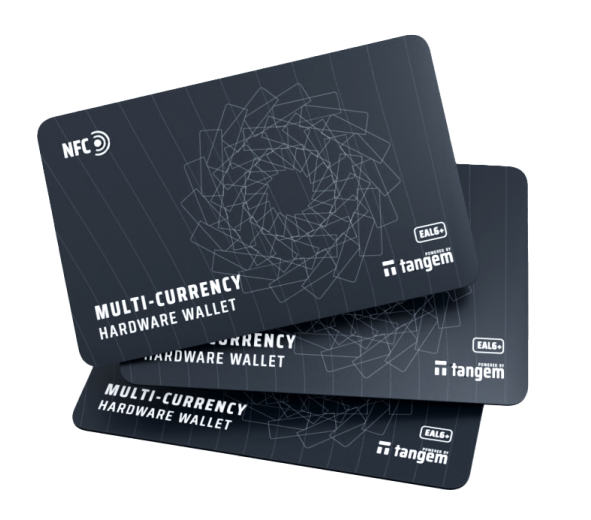
They look like a bank card but hold your private keys securely, and they make the recovery model different rather than dependent on a long human-readable phrase.
Actually, wait—let me rephrase that: they replace a fragile human mnemonic with tamper-resistant hardware that can be copied or backed up under different rules, which changes the threat model substantially.
For people who want a pragmatic, pocketable solution, that shift matters a lot.
Hmm…
My first impression was skepticism, because anything so convenient tends to hide complexity under the hood.
On the other hand, developers building smart-card interfaces have been thinking about secure element architecture for years, and their tooling has matured.
So I dug into a few real devices and tested workflows, looking specifically for multi-currency support and how each device handled blockchain-specific quirks.
What surprised me was how many of them, including Tangem, straddle convenience and strong isolation of keys quite well.
Whoa!
Let me be blunt: convenience without proper cryptography is a disaster in waiting.
My tests focused on how private keys never left the card, how transactions were signed, and how backups could be created without exposing keys.
There are trade-offs — for instance, some smart cards don’tallow for the same advanced scripting that a full-featured hardware wallet might, which can matter for certain DeFi flows — but for basic custody and cross-chain holdings they’re excellent.
And yes, somethin’ about tapping a card to sign a transfer feels way more natural than fumbling a seed phrase at 2 a.m.
Really?
Really — because multi-currency support has moved from gimmick to baseline in recent models.
That matters if you want a single physical object to represent your whole portfolio, not just ETH or Bitcoin in isolation.
In practice this means the smart card’s firmware and partner apps must implement token standards and handle chain IDs correctly, and that requires ongoing maintenance and trust in the vendor.
Trust is the kicker: you trade some control for ease, and you have to evaluate the vendor like you would a bank or custodial service.
Here’s the thing.
I’m biased, but I prefer non-custodial hardware that minimizes external dependencies while still being usable for normal people.
I’ve used devices that were secure but too nerdy for a spouse to operate, and devices that were easy but had questionable update paths.
So the sweet spot is a product that keeps keys on a secure element, provides clear recovery alternatives, and supports the major chains out of the box so you don’thave to juggle multiple tools or memorize complex derivation paths.
That combination reduces human error without creating opaque single points of failure.
Whoa!
A practical backup model is critical and often overlooked.
Some smart-card solutions let you clone cards to create cold backups, others rely on paired mobile device backups, and some use Shamir-like schemes spread across multiple cards or custodians.
On balance, I like the idea of creating multiple physical tokens that can be stored separately, because that preserves decentralization while giving you redundancy, though it does add management overhead and slight cost.
It’s a trade-off, and it’s okay to admit that managing multiple cards feels like managing multiple keys — you still need a plan.
Hmm…
Security isn’tonly about the key storage medium; it’s about the whole chain: supply, firmware updates, user interface, and recovery procedures.
Attackers will pivot to the weakest link, which might be the vendor’s website, the mobile companion app, or user error during an OTA update.
Therefore vetting the vendor, understanding update mechanisms, and keeping an eye on community audits matters as much as the chip inside the card does, which is something many people skip.
That oversight bugs me, because good hardware can be undermined by sloppy ecosystems and very very careless practices.
Whoa!
One advantage of products like tangem is the effort to bridge banking familiarity with crypto security concepts.
They market a tap-and-sign user flow that reduces mental overhead for non-technical users, and that can dramatically lower the incidence of loss caused by user mistakes.
Yet that simplicity doesn’tabsolve users from learning the basics: what a private key is, how to avoid phishing, and how to verify addresses before signing transactions.
So adoption demands education alongside hardware, which is why I often include short walkthroughs when I recommend gear to friends.
Really?
Really — because the future won’tbe a single perfect solution.
For institutional custody, multisig setups and air-gapped multisig cards may be best, while everyday users might prefer a pocket card plus one cold backup in a safe.
On one hand multisig increases complexity and cost, though on the other hand it dramatically reduces single-point-of-failure risk, which for some wallets is worth the hassle.
Decide based on threat model, not on hype.
Here’s the thing.
I’m not saying throw away seed phrases tomorrow; many ecosystems still rely on them for advanced recovery and interoperability.
But for a large segment of users — people who want a clean, multi-currency, low-friction custody model — smart-card wallets are a viable seed phrase alternative that deserve attention and testing.
And the ecosystem will continue to evolve, adding standards and better UX, which means the gap between security and usability will keep narrowing even as new threats emerge.
I’m curious how you test these devices yourself, because hands-on experience reveals quirks that reviews often miss.
Whoa!
Okay, so check this out — a small FAQ to answer practical questions fast.
I’ll be honest: I’m not 100% sure about long-term warranty policies for every vendor, and policies change, so check before you buy.
Still, here’s the practical guidance I use when advising people in person, distilled into quick answers you can act on.
Some of it is obvious, some not, and some of it is personal preference, so take it with a grain of salt.
Quick FAQ
Common questions
Can a smart-card wallet really replace a seed phrase?
Yes for many users — it replaces the human-memorizable mnemonic with hardware-backed keys and alternative backup models, though some ecosystems still require textual recovery options for interoperability.
Is multi-currency support reliable?
Mostly yes — modern cards support major chains and tokens, but check for specific chains you use and understand firmware update practices because token standards evolve.
What about supply-chain risk?
It’s real. Buy from reputable channels, verify packaging and authenticity, and prefer vendors with transparent audits and clear update policies.
How should I back up a smart card?
Create one or more physical copies or use a vendor-recommended recovery method, keep backups geographically separate, and avoid storing all copies together — common sense applies.